
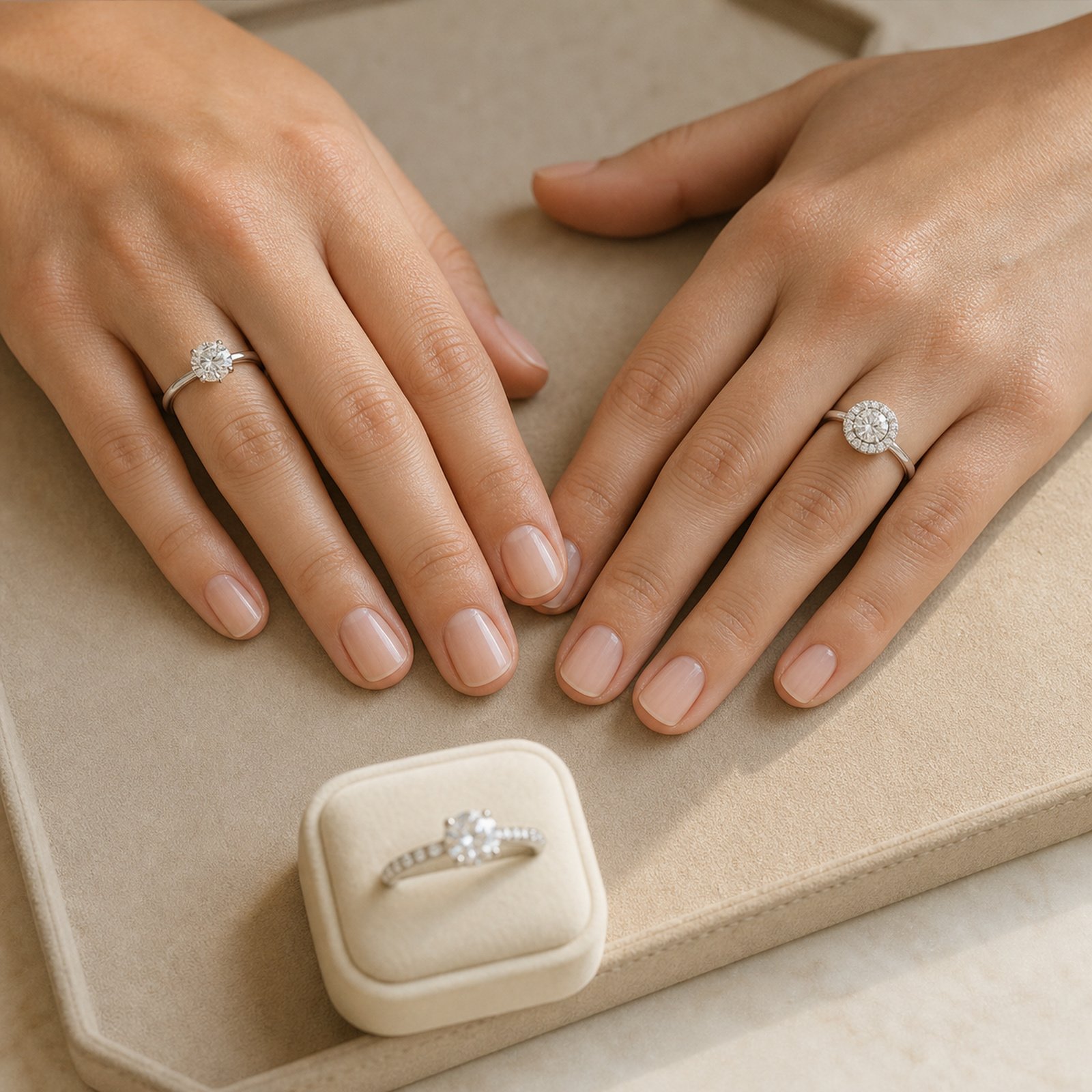
It starts with a conversation, not a tray
Most people expect a diamond consultation to begin with stones. It usually begins with questions. What is the piece for? Is there a date to work towards? Has someone already hinted at a shape they love, or is the field wide open?
These answers narrow things down faster than any catalogue. A ring meant to be worn every day for thirty years leads somewhere different from a piece intended for occasions.
Why time changes the outcome
Diamonds are hard to judge quickly. Two stones with almost identical paperwork can look noticeably different in the hand, and the difference is often only visible when you can turn them, move them into different light, and compare them side by side.
An unhurried appointment gives you that. There is no reason to decide in the room. Many people look, ask, go away and come back to the question later.
Questions worth bringing
You do not need technical vocabulary. It helps far more to arrive with practical questions: how will this sit against a wedding band, how does this setting handle daily wear, what am I actually paying for in this particular stone.
If something is explained in language you do not follow, that is a signal to ask again. A good consultation leaves you able to explain your own choice to someone else.
Deciding afterwards
Nothing about a consultation obliges you to buy. It is reasonable to leave with notes, photographs of what you saw, and a clearer sense of what you want — and to make the decision somewhere calmer.
Any terms around a purchase — documentation, warranty, resizing, aftercare — are set by the company you buy from and should be confirmed directly with them before you commit.